


UHCL physics graduate joins NASA Goddard Space Flight Center
Don't tell yourself it's impossible. Nothing is truly impossible. I went from almost not graduating high school to working at NASA.

Just a few years ago, Andrew Gallaher was unsure whether he could pursue a degree in physics. Today, the University of Houston-Clear Lake graduate is helping support one of NASA's most iconic scientific missions.
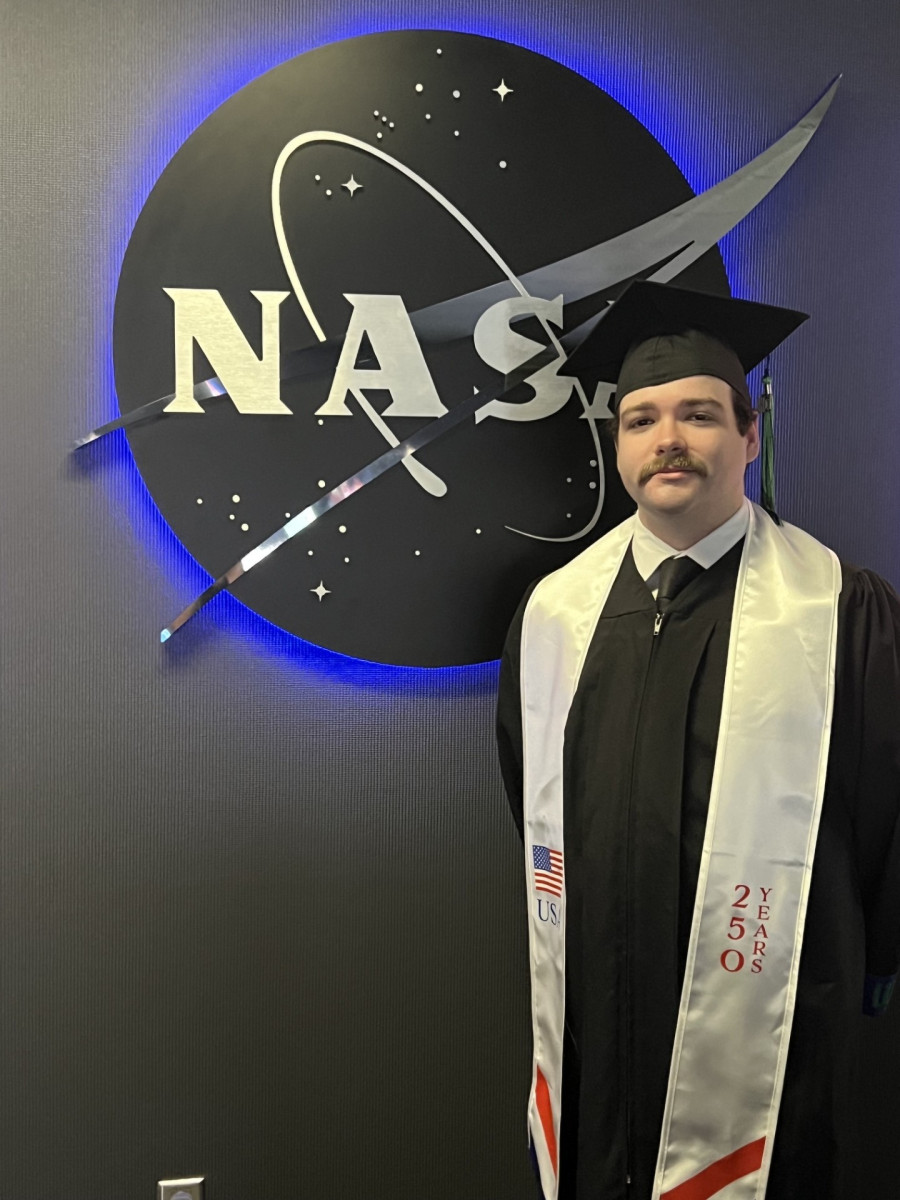
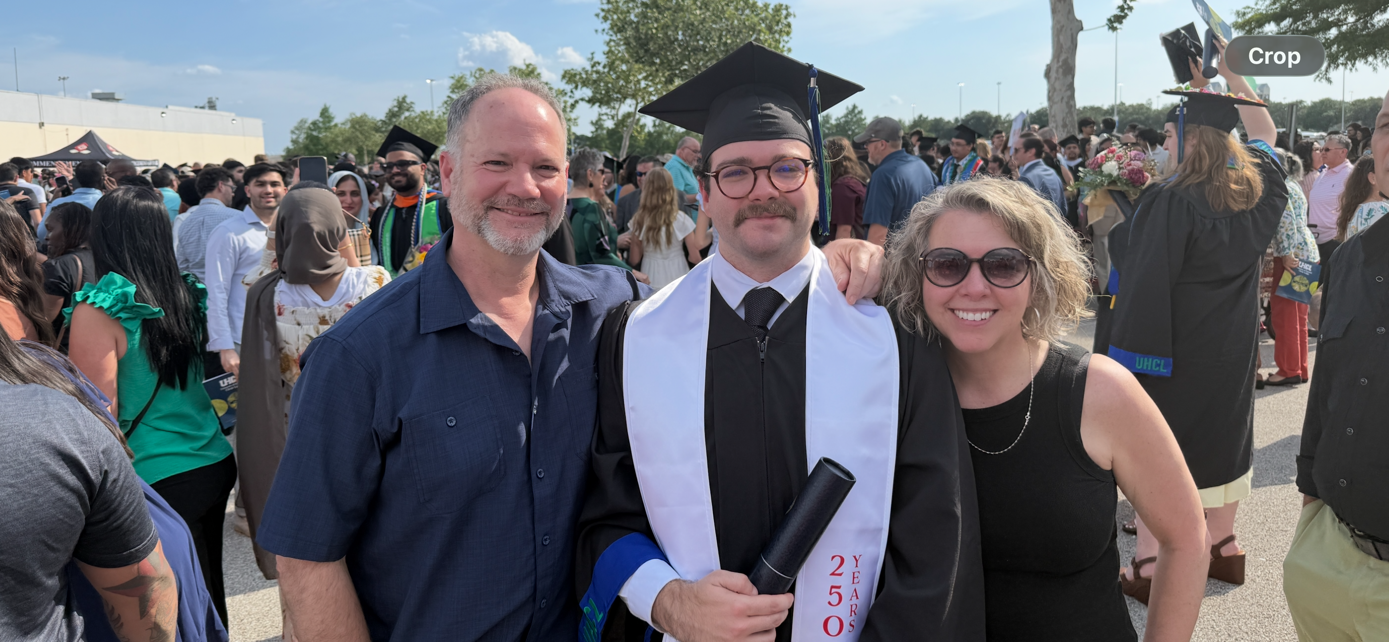
Weeks after earning his Bachelor of Science in Physics from UHCL, Gallaher accepted a position at NASA's Goddard Space Flight Center, located in Maryland just outside of Washington, D.C. At Goddard, he serves as an engineer on the Hubble Space Telescope operations team supporting the Optical Telescope Assembly group.
His journey from a student who questioned his own abilities to an engineer contributing to humanity's exploration of space was shaped by perseverance, mentorship, and a willingness to embrace opportunities as they appeared.
Finding the right launchpad
Originally from Detroit, Michigan, Gallaher knew he wanted to build a future in aerospace. Houston's reputation as the center of American human spaceflight made attending UHCL an easy decision.
"Coming from Detroit, I wanted to make the move somewhere that had more aerospace opportunities, as Michigan is 95% automotive," he said. "Everyone knows Houston is the hub of spaceflight, so seeing UHCL next door to the Johnson Space Center (JSC) made it a no-brainer."
Although he began college as a computer science major, his academic direction changed after enrolling in physics courses taught by UHCL faculty who helped him see a future he had not previously considered.
"I always knew I had a passion for physics, though I never felt like I was smart enough to pursue it," Gallaher said. "When taking University Physics I and II with Dr. Evan Richards, he was so passionate about every detail, and he really made me feel like physics was an achievable academic path."
That encouragement became a turning point, setting Gallaher on a path that would eventually lead to NASA.
The people who opened doors
When Gallaher reflects on the people who helped shape his career, one person stands out.
"Bernadina (Bernie) Streeter, program manager from UHCL's Office of Strategic Partnerships, is easily the biggest influence on where I am today," he said. "Starting from the moment I met her, she made it her goal to help me achieve my dream of working at NASA."
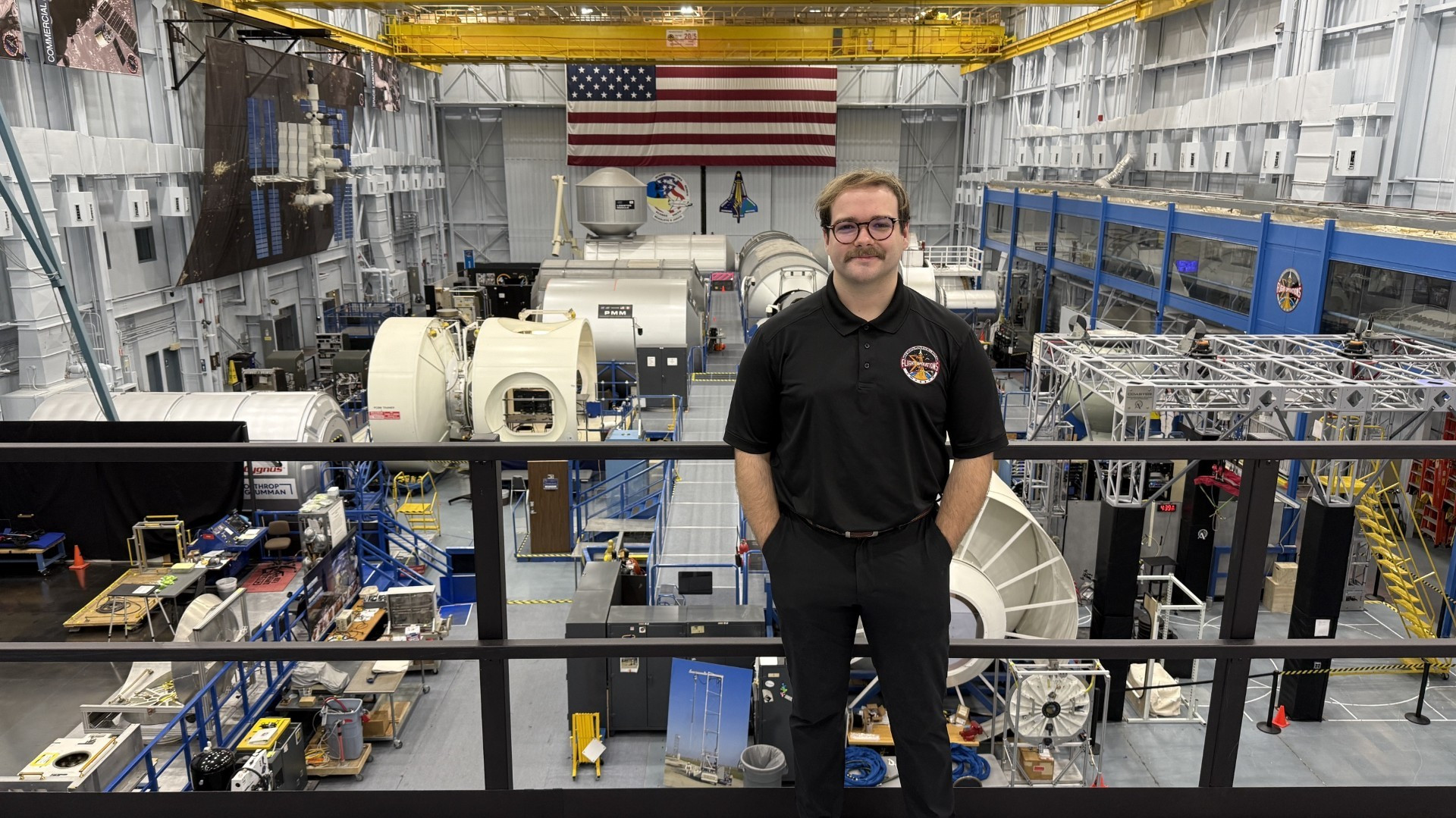
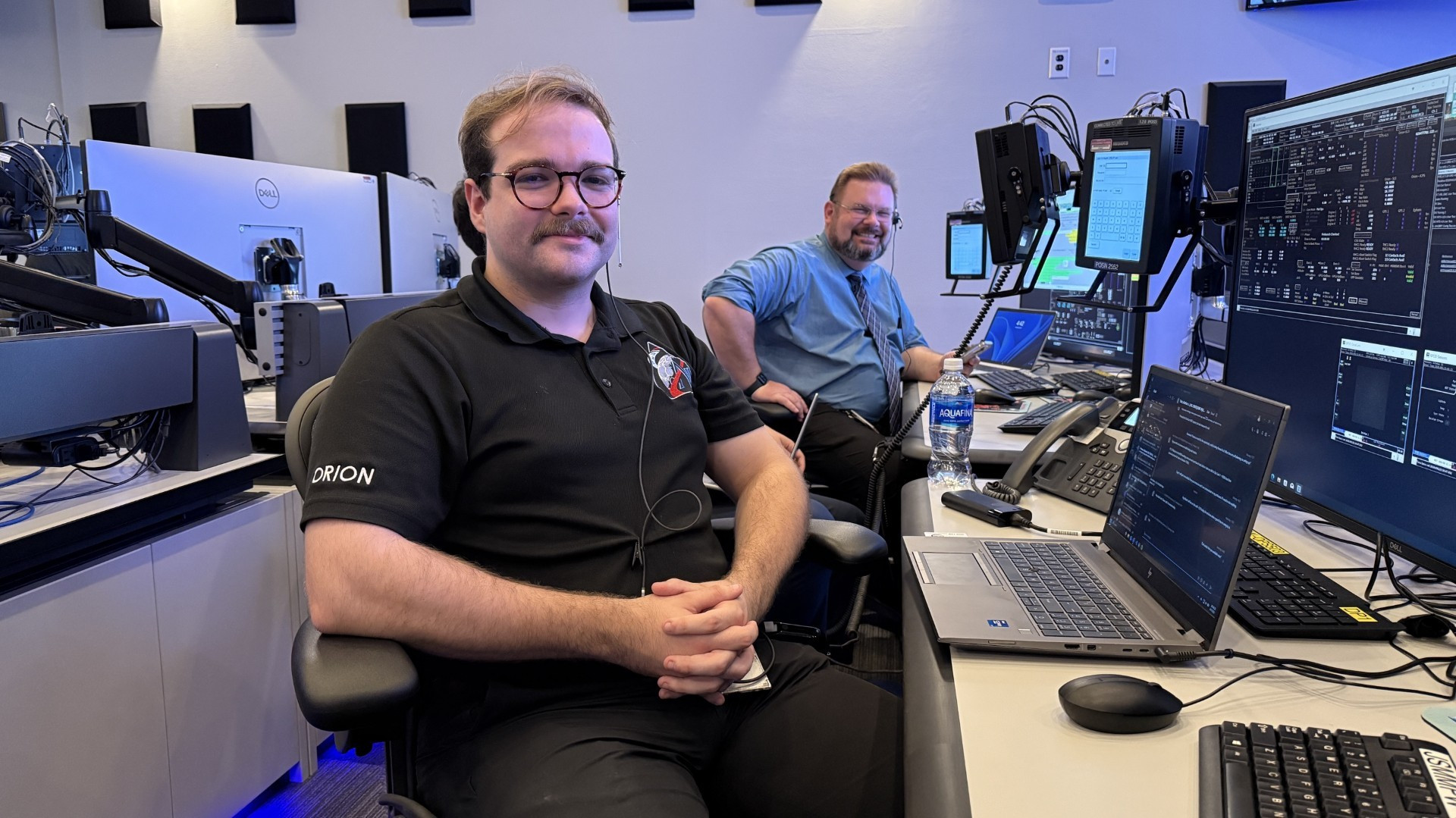
Through the Strategic Partnerships office, Gallaher secured an internship with KBR supporting NASA's JSC. What began as a student opportunity evolved into more than two years of hands-on experience supporting mission operations and flight control teams.
"When an opportunity opened up at KBR, contracting to JSC, Bernie Streeter was a key player in getting me that position," Gallaher said. "I owe the opportunities I have today to Bernie and her team at UHCL."
He also credits the university's physics faculty for helping him balance the demands of a rigorous academic program with the responsibilities of supporting active NASA projects.
"The entire physics faculty was supportive of me throughout my time in the program," Gallaher said. "Whenever I had scheduling conflicts, such as working on Artemis II, they were beyond flexible and worked with me on any missed classes or other conflicts."
Their support allowed him to gain valuable professional experience without losing momentum in the classroom.
Turning classroom lessons into real-world impact
Gallaher's education at UHCL provided both technical expertise and the problem-solving mindset required for complex aerospace work. His computer science coursework introduced him to programming languages such as Python, skills he later applied at JSC to develop computational tools for orbital navigation calculations. Those tools continue to support Boeing CST-100 Starliner rendezvous-and-docking missions and simulations involving the International Space Station (ISS).
At the same time, his physics education strengthened his ability to analyze and solve difficult problems.
"Physics gave me irreplaceable skills in problem-solving," Gallaher said. "Every day at NASA, I encounter a new problem, whether mathematically or another complex issue. UHCL taught me how to approach solving those problems from start to finish."
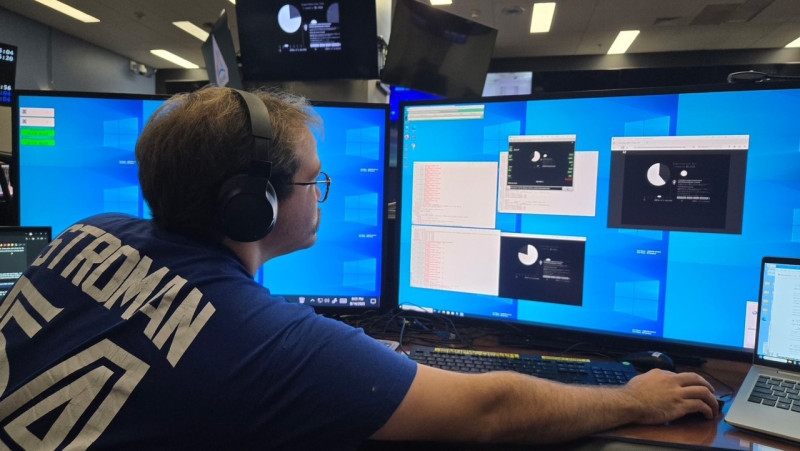
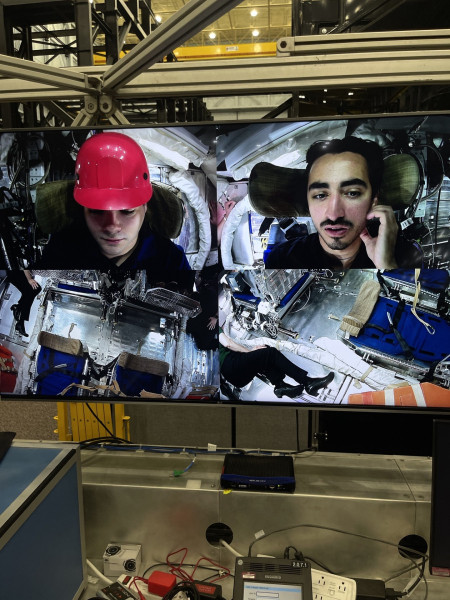
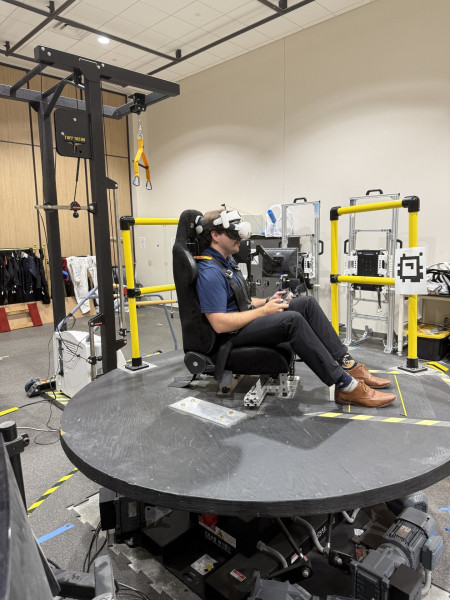
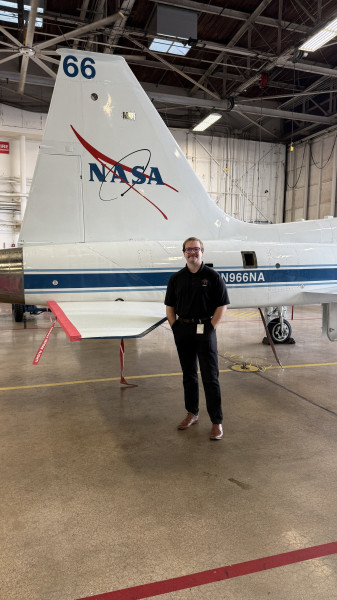
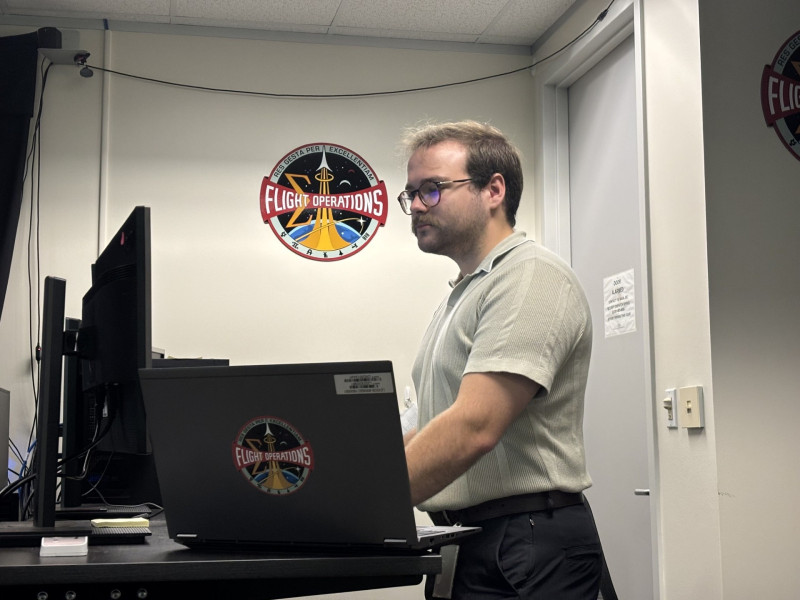
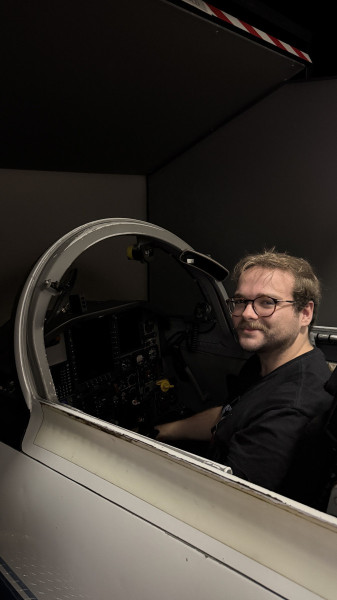
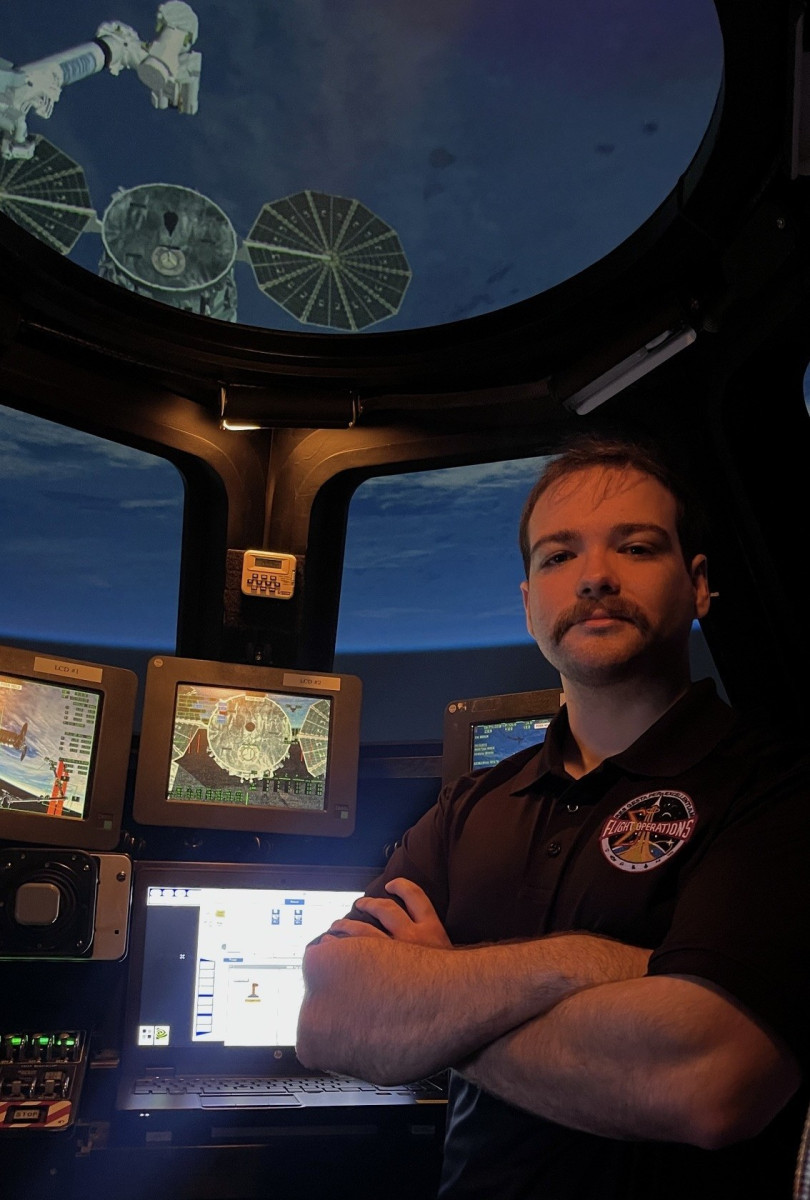
During his internship, Gallaher contributed to several high-profile projects, including an orbital trajectory display for Boeing's CST-100 Starliner, a docking camera display supporting Artemis II operations, and virtual reality training environments that recreated ISS emergency scenarios for astronauts.
Among those experiences, one opportunity stands above the rest.
"Creating the docking camera display presented me the opportunity to support the real Artemis II mission on console in the Mission Control Center, an experience I will never forget," Gallaher said.
Persevering through self-doubt
Despite his accomplishments, Gallaher said his path through college was far from easy.
"Every day," he said when asked whether he faced challenges during his academic journey. "In almost every physics class, I never felt like I was as knowledgeable as I was supposed to be."
Rather than allowing those doubts to stop him, he embraced the reality that growth often comes through struggle.
"I would tell myself that physics is supposed to be hard," he said. "This meant lots of late nights doing homework, studying for exams, and learning more about each topic. It was years of doubt and struggle, but I did it."
Balancing coursework with professional responsibilities required discipline and resilience. Some days began with work at JSC, continued with evening classes at UHCL, and ended with overnight Artemis II mission simulations.
"There were days I would go on-site at JSC, work from 8 a.m. to 3 p.m., go to class at UHCL from 4 p.m. to 7 p.m., then back to JSC for a second-shift Artemis simulation," he said.
The demanding schedule taught him lessons in time management and perseverance that continue to serve him in his professional career.
Reaching for new frontiers
Today, Gallaher has begun a new chapter at Goddard Space Flight Center, where he works on operations supporting the Hubble Space Telescope.
For someone who has long been fascinated by space exploration, the opportunity is professionally rewarding and personally meaningful.
"Space telescopes have always been interesting to me — the forefront of answering the universe's unanswered questions," he said. "Getting the opportunity to try out a different side of spaceflight has been really interesting so far."
The move also brings him closer to family in Detroit. Yet beyond any individual mission or position, Gallaher's motivation remains rooted in a lifelong passion for exploration.
"I have always been passionate about spaceflight," he said. "The idea of humanity leaving this planet and crossing new frontiers, with the goal of making life interplanetary."
A message for Hawks
Gallaher hopes current and future students recognize that ambitious goals often seem impossible until someone commits to pursuing them.
"Don't tell yourself it's impossible. Nothing is truly impossible," he said. "I went from almost not graduating high school to working at NASA."
His advice is simple: find something exciting and stay committed to it, even when the path becomes difficult.
"Find something you are passionate about, academically or professionally, and tell yourself that you will get there, no matter what," Gallaher said.
When asked what role UHCL played in helping him reach his goals, he answered without hesitation.
"UHCL is the sole reason I am the person I am today," Gallaher said. "From the team in the Strategic Partnerships office believing in me and supporting me the past two-plus years, to the professors who pushed me to do my best. I genuinely owe it all to UHCL."
Andrew Gallaher’s story serves as a reminder that remarkable careers are rarely built in a single moment. They are built through persistence, mentorship, hard work, and a willingness to seize opportunities as they arise. For Gallaher, those qualities helped transform a dream of working in spaceflight into a career supporting some of NASA's most critical missions.
Ready to turn your passion into a career? Discover how UHCL's Physics Program and Office of Strategic Partnerships connect students with hands-on experience, industry mentors, and opportunities that can launch extraordinary futures at www.uhcl.edu/science-engineering/departments/mathematical-applied-and-physical-sciences/physics/ and www.uhcl.edu/strategic-partnerships/.