




Helping Students Find Their Voice

Outstanding Professor Award recipient Heather Kanenberg, Ph.D., combines high expectations with personal support, helping students develop the confidence and professional identity to advocate for others.
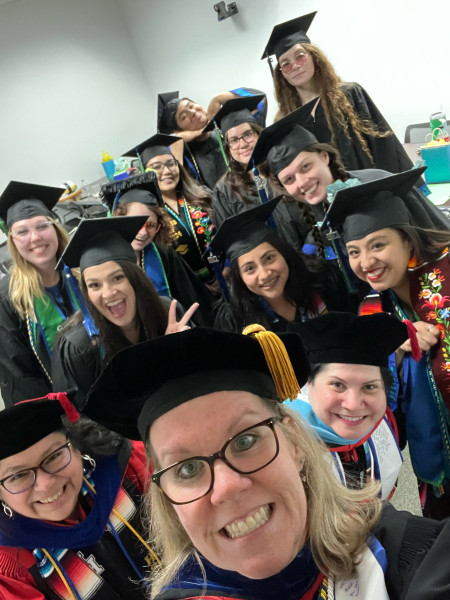
Heather Kanenberg watches for the moment when a student begins to believe their voice matters. A student who once hesitated to speak starts contributing more often. Another becomes comfortable asking a question when something is unclear. Over time, students who doubted whether their ideas belonged in the conversation begin to recognize what they have to contribute.
 For Kanenberg, program director and professor of social work in University of Houston-Clear Lake’s College of Human Sciences and Humanities, those changes represent more than classroom participation. They show students developing the confidence they will need to advocate for clients, influence policy and serve their communities.
“It’s a joy to see students over the course of their time in the program become more vocal, more confident or assertive in their ideas,” Kanenberg said. “I need to hear you. You’ve got to speak. You have important points to share.”
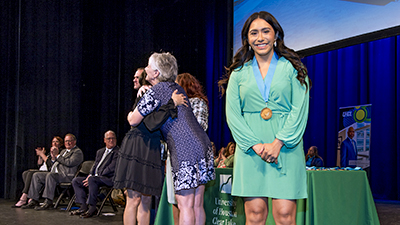
Kanenberg’s commitment to students has earned her the UHCL Alumni Association’s Outstanding Professor Award. The recognition honors professors who inspire students through teaching, mentoring and active involvement while helping create a sense of community across the university.
Her approach combines encouragement with high expectations. Students need to know their professors are invested in their success, Kanenberg said, but preparing to serve others also requires rigor, responsibility and a willingness to grow.
“I try to be the kind of professor who is supportive and encouraging, but also sets high expectations,” she said. “I love being able to be a part of the students’ development and watching them blossom into the professional social workers they are going to be.”
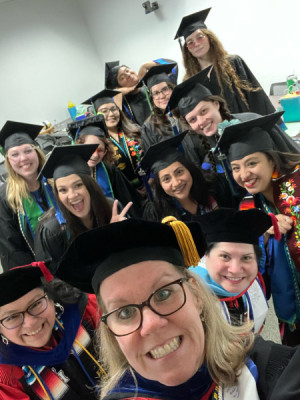 Students have described Kanenberg as accessible, responsive and willing to make room for their perspectives. Her door is open when they need guidance, and she makes herself available to review drafts, discuss feedback and help students work through challenges inside and outside the classroom.
Those practices extend beyond effective instruction because they reflect the profession her students are preparing to enter. Listening, meeting people where they are and respecting the experiences they bring are foundational principles of social work.
“Making space for others is really at the core of how social workers do their work,” Kanenberg said. “I am always trying to model for students who are learning what social work is and what one social worker can look like.”
Students are not simply acquiring information in Kanenberg’s classroom. They are developing a professional identity shaped by how they are heard, challenged and supported. Their questions also influence her, prompting her to examine topics more deeply, adapt her methods and connect course material to the lives students lead and the communities they will serve.
Kanenberg has watched the students in her program change over time, including a shift toward more traditional college-age students. Yet many continue to balance employment, caregiving, family responsibilities and other demands. Understanding who they are helps her make the material relevant without lowering the expectations of the profession they are preparing to enter.
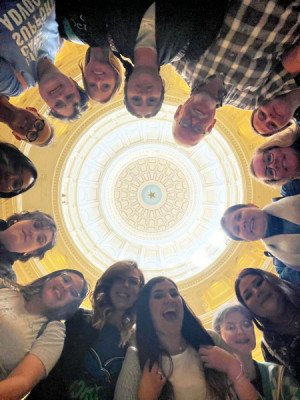 Their development becomes especially visible during the internships required to complete the social work degree. Kanenberg delights in students stopping by her office to share what they have learned, how they are applying ideas from the classroom and where professional practice has challenged their assumptions.
“Having them come by the office and tell me what they’re getting to do in the community with clients or with their colleagues, and the way they’re using what they’ve learned, is the most fun,” she said.
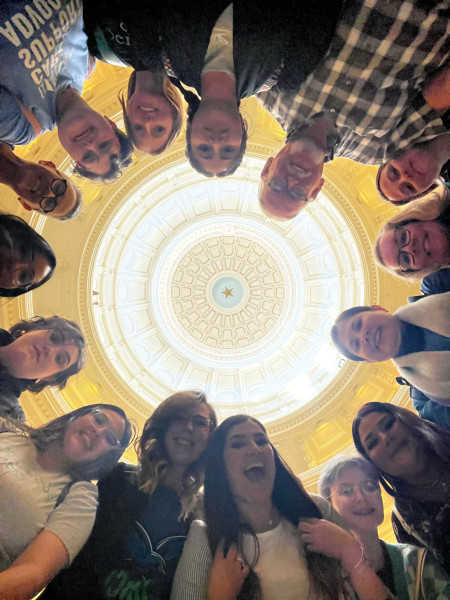
The results can also be seen when students use their growing confidence to advocate for change, share their experiences with elected officials or engage community leaders. What begins as finding the courage to speak in class can become the ability to speak on behalf of people whose needs might otherwise go unheard.
Kanenberg’s investment in students extends beyond her courses. She has advised the Social Work Student Organization and Phi Alpha Social Work honor society, guided students through the Bachelor of Social Work program and supported the internship experiences that connect academic preparation with community practice. Her work has previously earned her recognition as UHCL’s Faculty Advisor of the Year.
Her university service also reflects the broader qualities recognized by the Outstanding Professor Award. Through faculty leadership and broader university service, Kanenberg has worked to understand how institutional priorities and decisions shape the student experience.
That broader view helps her anticipate how changes may affect students, explain what is happening and connect them with people who can help. It has also strengthened her relationships with faculty and staff whose dedication reinforces what she considers one of UHCL’s defining qualities.
“You are not going to be a face in the crowd,” she tells students. “If you miss a class, I am going to check in with you and ask if you are all right or if there is something you need.”
Kanenberg discovered what teaching could make possible after a mentor invited her to serve as an adjunct at UHCL. By her second week in the classroom, she knew she wanted to make it her career.
 Her commitment to UHCL became even clearer after her partner’s work took their family to Northern Virginia in 2010. Kanenberg left believing she was walking away from the best job she would ever have. When the family returned three years later, an opening allowed her to compete in a national search for her former position and come back to the university.
Nearly 20 years into her teaching career, students continue to sustain her commitment. Their determination to earn a degree, develop professionally and improve the lives of others continually challenges her to become a better educator.
The Outstanding Professor Award recognizes Kanenberg’s teaching, mentoring and service, but the strongest evidence of what makes her outstanding can be found in her students. Each one who leaves UHCL more confident in what they know, more willing to use their voice and better prepared to make room for the voices of others carries her influence into the agencies and communities where social workers turn listening into action.