

UHCL student team advances in NASA's Micro-g NExT Design Challenge

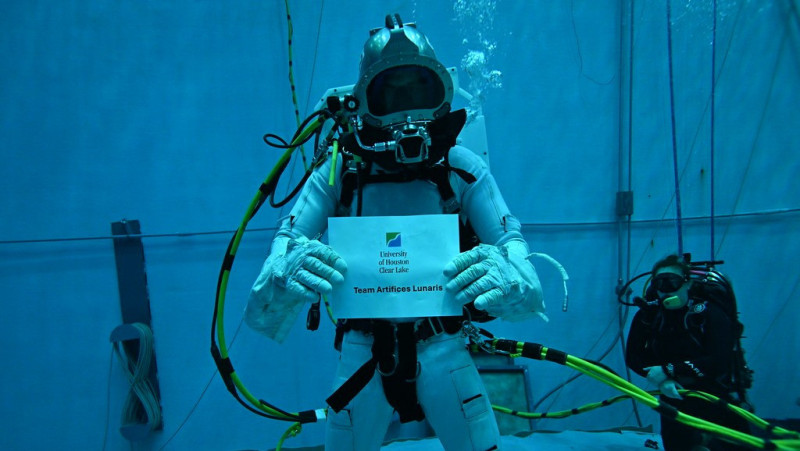
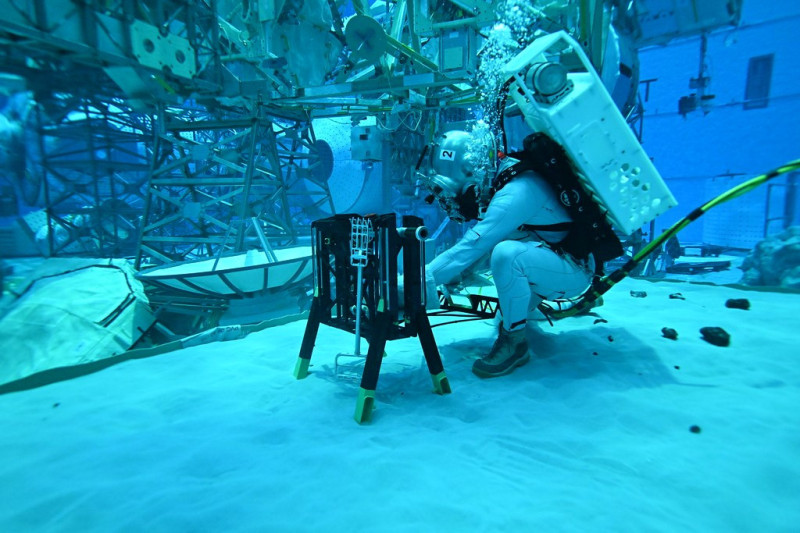
A University of Houston- Clear Lake (UHCL) team of mechanical engineering students, Artifices Lunaris, has emerged as one of only 13 teams nationwide to advance in NASA's prestigious Micro-g NExT Design Challenge. This annual competition invites undergraduate students to design, build, and test a tool or device that addresses real-world space exploration challenges. In June, the team was selected to test their prototype, a Hand Carrier for the Lunar EVA Tool, at NASA’s Johnson Space Center’s Neutral Buoyancy Lab (NBL). If the design is selected, NASA divers test the tools while the students direct the divers from the Test Conductor Room of the NBL facility.
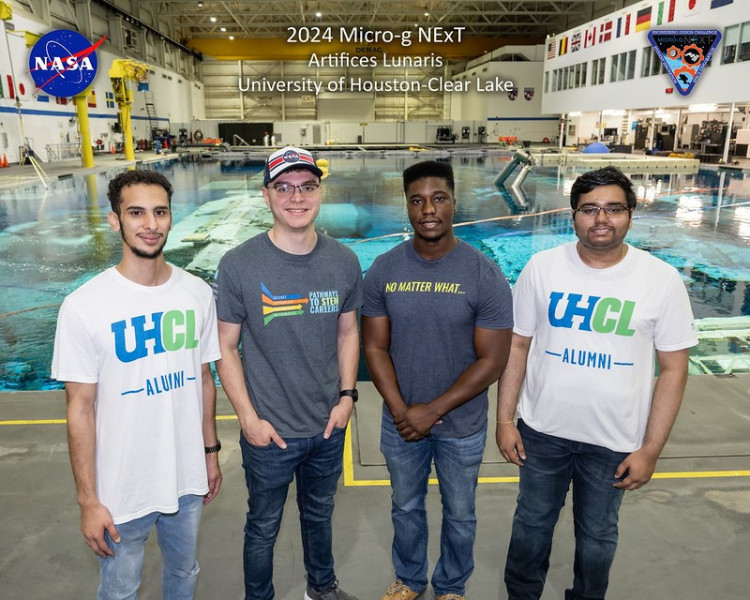
The Artifices Lunaris team, comprised of Adrian Garcia, Blair Mitchell, Buvaneshraj Saravanan, and Omar Tubeishat and guided by their faculty sponsor, Dr. Kazi Md Masum Billah, excelled with their innovative proposal among numerous national entries. Their device aims to simplify the transportation and handling of geological sampling tools on the moon, focusing on ergonomics, dust tolerance, and reliability – a critical step towards ensuring astronaut efficiency during missions.
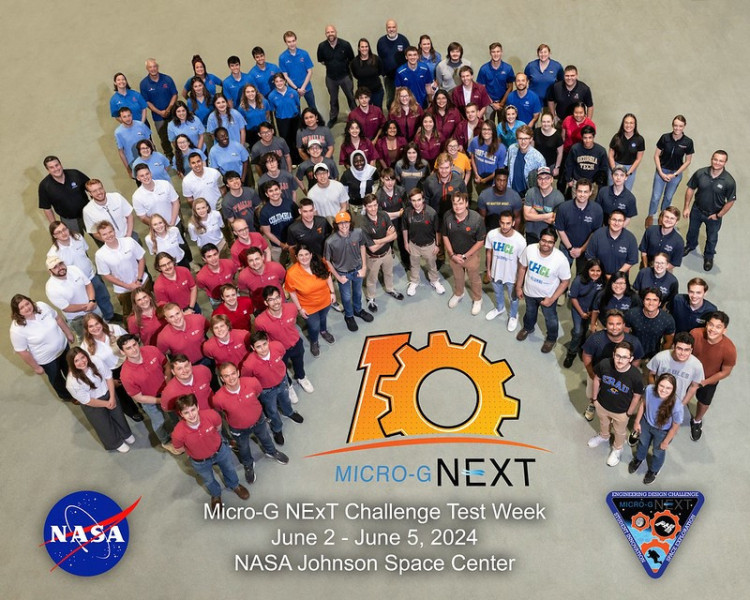
The 2024 challenge focused on Orion crew safety and lunar extravehicular activities (EVA) operations during the Artemis missions and allowed students to apply their knowledge and skills to real-world problems. Billah, Assistant Professor of Mechanical Engineering, said it is an incredible honor to be selected as one of only 13 teams to advance in the challenge nationwide, and it reflects the hard work and dedication of the students.
“This selection reflects our students' hard work and dedication and highlights the innovative spirit and technical expertise fostered within our program,” said Billah. “It is a testament to the commitment and talent of our team, and we are thrilled to have this unique opportunity to contribute to NASA’s Artemis missions.”
Preparing the students for this challenge involved a comprehensive approach that combined theoretical knowledge with practical application. In the Fall of 2023 at the Senior Design Project, the team started with an in-depth understanding of the specific challenges posed by the Artemis missions and the requirements set forth by NASA.
“This was followed by iterative design sessions, prototyping, and rigorous testing in Spring 2024,” said Billah. “I also emphasized the importance of teamwork, communication, and project management skills. Additionally, we collaborated with the NASA engineers to ensure our designs met the highest standards of functionality and innovation.”
Participating in the Micro-g NExT Design Challenge offers invaluable experience for students. It allows them to apply classroom learning to real-world engineering problems, fostering a sense of accomplishment and excitement about contributing to space exploration.
“I hope to guide and support future student teams in this challenge,” said Billah. “This group of students, known as The Artifices Lunaris, is unique due to their diverse backgrounds, interdisciplinary approach, and unwavering dedication to the project,” Billah continued. “They bring together a mix of skills and perspectives, from mechanical engineering to project management, allowing them to tackle complex problems creatively and effectively. Their passion for space exploration and commitment to excellence set them apart as a remarkable team.”
Billah also highlighted the impact of mentorship and support from UH-Clear Lake and NASA NBL engineers. The Artifices Lunaris team’s success is a result of their hard work and the guidance and resources provided by the mechanical engineering program and UHCL.
Billah emphasized the importance of experiential learning opportunities in preparing students for worldly challenges and inspiring the next generation of engineers and innovators. He noted that this challenge demonstrates the value of such opportunities and how they can foster innovation, teamwork, and critical thinking.
Omar Tubeishat, a recent graduate and team member, shared insights into the team’s extensive preparation.
“Our preparation involved rigorous planning and extensive research. We spent countless hours brainstorming, designing, and testing our prototype,” said Tubeishat. “We also sought advice from our professors and industry experts, and we conducted multiple iterations to refine our design. Teamwork and communication were crucial throughout this process.”
Artifices Lunaris’ idea stemmed from identifying a specific problem within the challenge guidelines and brainstorming innovative solutions.
“We conducted a thorough literature review to understand existing technologies and then used creative thinking sessions to generate unique ideas. Our design was the result of collaborative efforts, combining various concepts into a feasible prototype,” said Tubesihat.
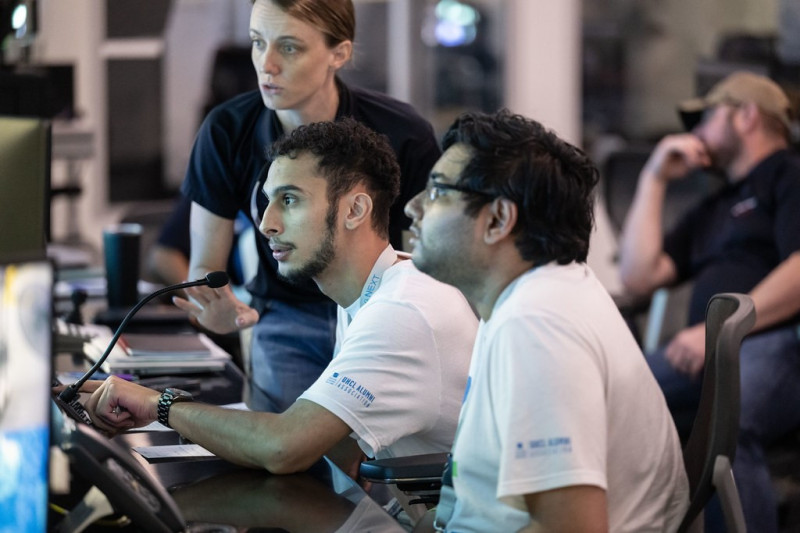
Tubeishat recalled that the best part of the challenge was the collaborative spirit and diverse perspectives each team member brought to the table.
“We learned a lot from each other, and the process of transforming our ideas into a tangible prototype was incredibly rewarding,” said Tubesihat. “This challenge is a fantastic opportunity that fosters innovation, teamwork, and critical thinking. We hope our participation inspires future UHCL students to take on similar challenges and continue our legacy of excellence.”
UHCL has provided an enriching and fulfilling learning experience for Tubesihat, equipping him with the technical skills, critical thinking abilities, personal and academic growth, and hands-on experience needed to pursue a career as an aerospace engineer.
“The practical projects and industry connections facilitated by UHCL have been instrumental in shaping my career path,” said Tubeishat. “The supportive faculty, diverse student body, and ample resources have all contributed to a conducive learning environment,” he continued. “I would like to emphasize the importance of mentorship and support from our professors and the UHCL community. Their guidance has been invaluable in our journey.”
The selection underscores the strength and competitiveness of UHCL’s Mechanical Engineering program. The College of Science and Engineering at UHCL is distinguished by its commitment to providing a hands-on, experiential learning environment, with programs designed to integrate cutting-edge research, industry partnerships, and practical experience.
The College of Science and Engineering at UHCL has a dedicated, collaborative, and like-minded faculty, state-of-the-art facilities, and a strong focus on innovation and collaboration, preparing students to excel in their careers and make significant contributions to their fields.
For more information about UHCL’s College of Science and Engineering visit, www.uhcl.edu/science-engineering/. For more information about Micro-g NExT, visit www.nasa.gov/learning-resources/micro-g-neutral-buoyancy-experiment-designteams/.